
AI Sales Assistant Software: How to Evaluate It
Gen-X Team · Published · Updated · 8 min read
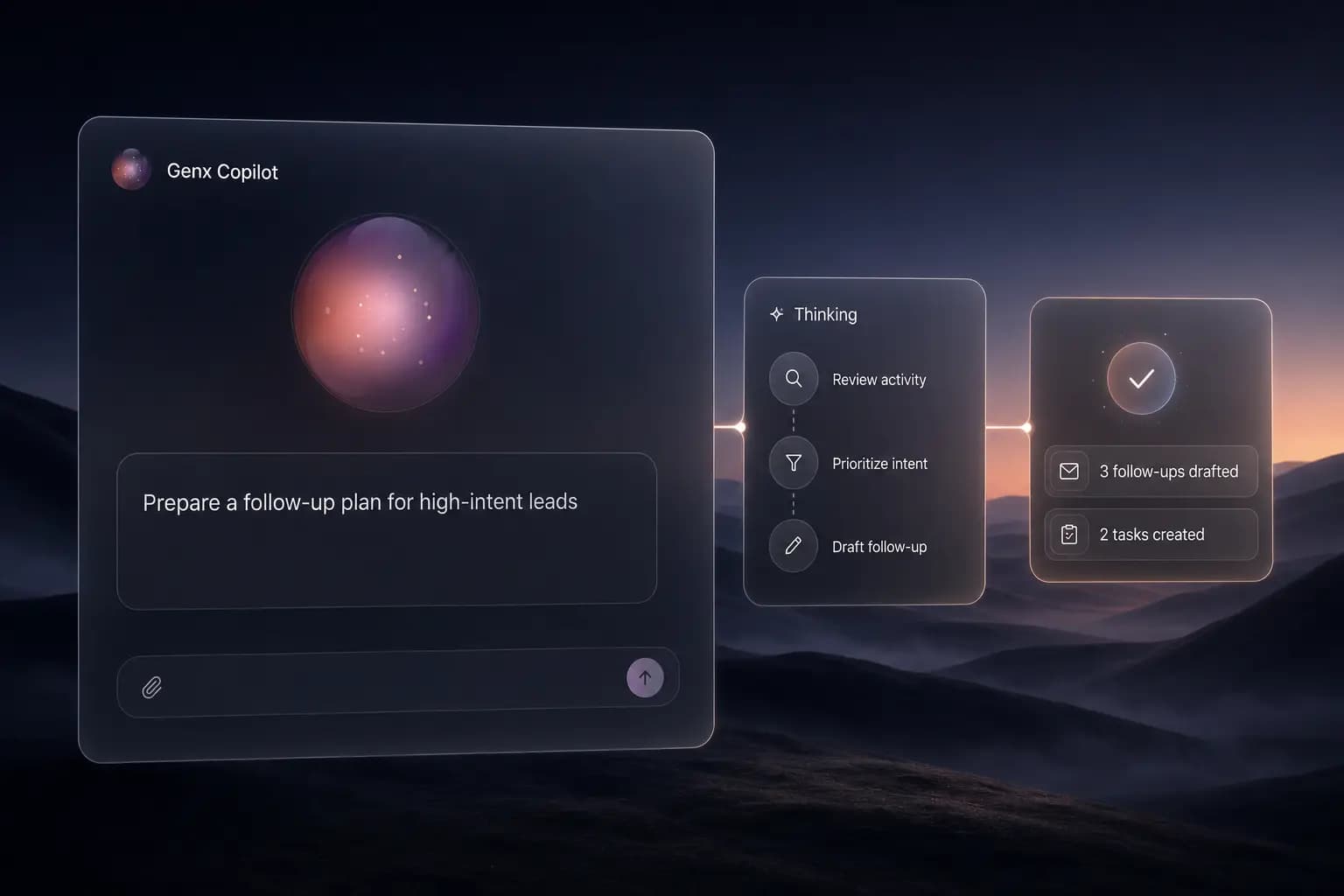
In short: AI sales assistant software handles the research, drafting, reply handling, and scheduling around a sale, using your real sales context and asking for approval before customer-facing actions.
What is AI sales assistant software?
AI sales assistant software supports the research, preparation, and coordination around a sales conversation. Depending on the product, it may find likely buyers, summarize account context, draft outreach, sort replies, book meetings, create tasks, or recommend the next action.
The assistant should reduce admin work without hiding judgment. Sellers need to see the evidence behind a recommendation, edit customer-facing output, and understand what the system will do after approval. The product becomes more useful as it carries trusted context between stages instead of starting from a blank prompt each time.
Use a five-part evaluation framework
Evaluate the assistant against a real workflow rather than a scripted prompt. Use representative account data, an active opportunity, a meeting, and a follow-up action. Include at least one missing field and one exception so the pilot tests operational behavior as well as output quality.
| Dimension | Question | Evidence |
|---|---|---|
| Context | What can the assistant reliably use? | Sources, freshness, citations |
| Control | Where is approval required? | Per-action approvals, review, stop rules |
| Workflow | Can it carry work to the next stage? | Tasks, meetings, pipeline updates |
| Integration | Does the right data move both ways? | Fields, ownership, activity history |
| Outcome | Which commercial metric improves? | Time saved, replies, meetings, pipeline |
Inspect output quality and uncertainty
Review whether summaries keep objections, commitments, owners, and open questions. For prospecting and outreach, confirm that claims come from verified fields or visible research. The assistant should not invent personalization when evidence is missing.
Look for calibrated behavior. A dependable assistant says when information is missing and routes the item for review. This matters most for strategic accounts, regulated markets, contractual commitments, and any workflow that changes customer or pipeline data automatically.
One AI sales assistant or a team of agents
A single-purpose assistant can be the right choice when one stage creates most of the friction, such as email drafting. When research, outreach, replies, and follow-up keep losing context between tools, a team of specialized agents that share one thread is usually a better fit.
Gen-X takes the team approach. Instead of one assistant, you get a crew you chat with like coworkers: Prospect Scout finds and verifies leads, Campaign Manager runs email sequences, Inbox Manager sorts and answers replies in Gmail or Outlook and books meetings, and Leads Manager keeps the pipeline current. Gen-X, the team lead, plans the work and sends a Daily Brief at 08:00. You choose per agent and per action what needs your yes, and you can approve from Gen-X, Slack, or WhatsApp. Teams should still check the integrations and controls against their own requirements before replacing an existing tool.
Define success before the pilot
Choose a baseline such as research time per account, reply response time, time from signal to action, or manual CRM updates. Add a quality measure: accepted recommendations, corrections, positive replies, or qualified meetings. Volume without relevance is not a useful outcome.
Run the pilot with the future owners of the workflow. Review exceptions every week, update the rules, and expand only after the team can explain what the assistant does and when a person must step in.