Prospecting
How to Build B2B Prospect Data Your Team Can Act On
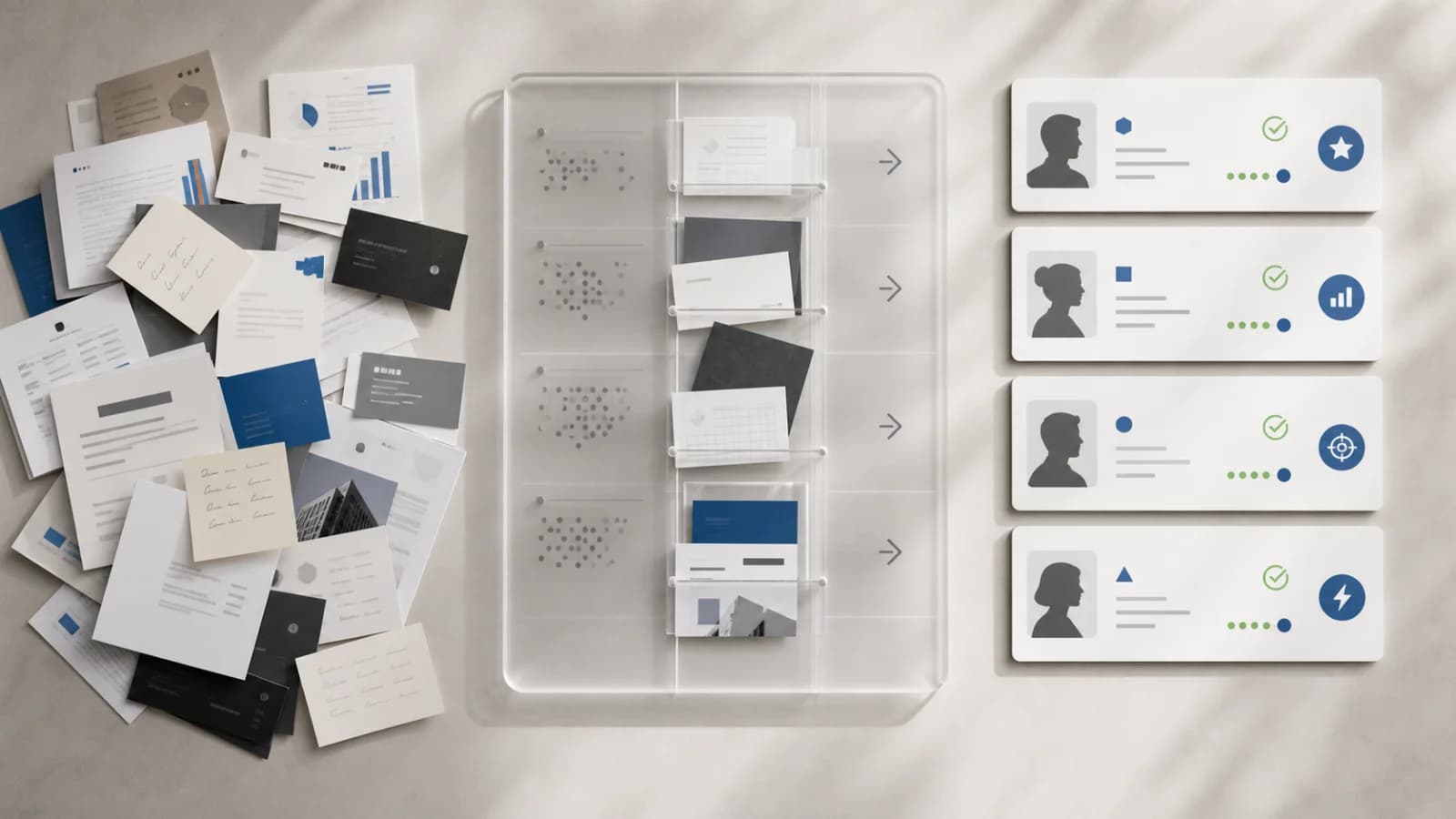
Build actionable B2B prospect data with enrichment, intent signals, and clear ownership without creating more manual work for sales reps.
More prospect data does not guarantee better prospecting
B2B teams can access more company and contact data than ever, yet reps still open records that are incomplete, duplicated, or impossible to act on. The issue is not simply data volume. It is whether the record helps someone make a specific sales decision: pursue this account, contact this person, use this angle, and act now.
Actionable prospect data combines identity, fit, timing, and ownership. It tells a rep who the prospect is, why the account belongs in the target market, what changed recently, and what should happen next. Without those layers, enrichment becomes an expensive collection exercise rather than a source of pipeline.
Define the decision before collecting the field
A clean data strategy begins with the workflow it needs to support. If the goal is territory planning, company size, location, industry, and ownership may be sufficient. If the goal is personalized outbound, the team may also need role, seniority, technology, hiring activity, and a verified contact channel.
Work backward from the rep's decision and classify every field as required, useful, or optional. This keeps the record compact and reduces enrichment costs. It also makes quality measurable: a record is complete when it can support the intended action, not when every possible column contains a value.
Create one dependable prospect record
Prospect information often arrives from forms, databases, research, events, product activity, and a CRM. A reliable workflow resolves those sources into one record with stable identifiers, normalized values, source attribution, and timestamps. Deduplication should happen before the record reaches a campaign or an owner's queue.
Freshness needs to be visible. Job titles, company size, domains, and contact details change at different rates, so a single generic 'verified' label is not enough. Store when a value was checked and where it came from. Reps can then judge confidence without repeating the entire research process.
Add signals that explain why now
Firmographic fit explains whether an account could become a customer. Signals explain why it may be worth engaging today. Useful examples include a new executive, a relevant hiring pattern, technology adoption, funding, a website visit, a form submission, or renewed engagement with an earlier campaign.
Signals become actionable only when they are tied to a play. A hiring event might trigger research and a tailored sequence; a high-intent visit might create a task for the account owner. The system should preserve the evidence and route the record with enough context for a human to review the recommendation quickly.
Measure data by the outcomes it enables
Database size is an easy metric and a weak goal. Track the percentage of target records that meet your action-ready definition, enrichment success by source, duplicate rate, bounced contacts, time to assignment, and conversion from signal to qualified conversation. These measures connect data operations to revenue execution.
The best prospect database is not the largest one. It is the one your team trusts enough to use without reopening five tabs. When each record combines relevant context, visible freshness, and an owned next step, prospect data stops being inventory and becomes a working part of the sales process.